
Blog
How AI Shopping Assistant Tools Are Changing Online Shopping in 2026
AI shopping assistant tools are changing online shopping. Find out what intent-driven product discovery means in practice, and how to get your brand agent-ready.
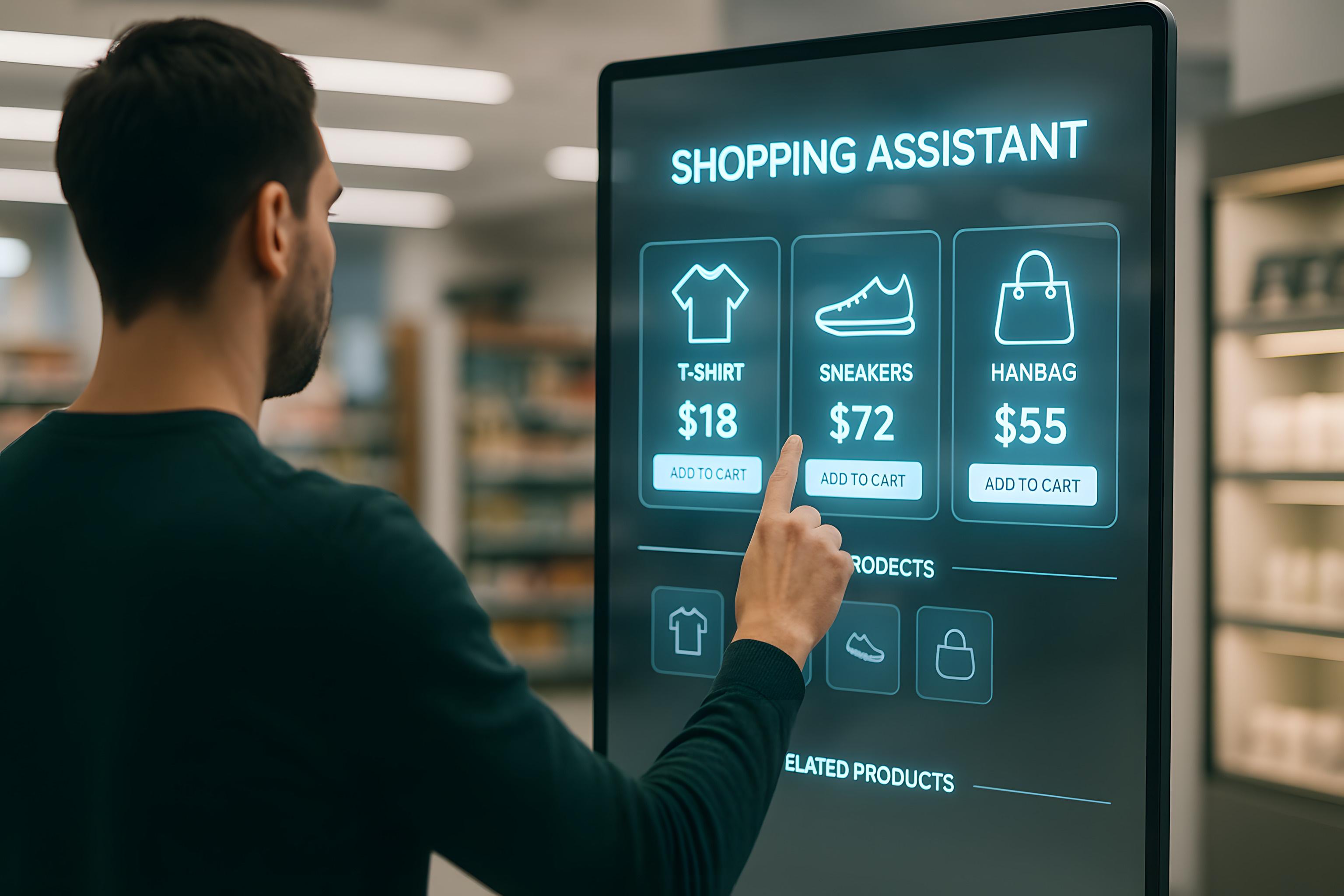
The gap between where shoppers are and where most ecommerce storefronts still operate has never been wider. Shoppers are arriving from ChatGPT, Perplexity, and Google AI Overviews with a clear mental model of what they want, and they expect the site they land on to already know it. For brands still relying on keyword search bars and static recommendation widgets, that expectation is a problem.
The AI shopping assistant has become the center of this conversation, but the term covers a lot of ground. Understanding what's actually changed in 2026 (and what still hasn't) is the difference between making a smart technology investment and adding yet another layer to an already fragmented stack. Let's break it down.
What's Actually Changed About AI Shopping Assistants in 2026?
The shift isn't cosmetic. Today's AI shopping agents don't follow a script, they interpret context. That's a fundamentally different architecture than what most enterprise stacks were built around, and the gap is widening with every quarter.
Before diving into specific tools and trends, it helps to have the full picture. If you're still getting up to speed on the basics, our guide to AI shopping assistants for ecommerce brands covers what they are, how they work, and why they matter — a solid foundation before exploring how the tools themselves are evolving.
How Are Today's AI Shopping Agents Different From Legacy Tools?
Legacy tools were reactive by design. They waited for the right keyword, matched it to a lookup table, and returned a result. If the shopper used different phrasing, or if their intent didn't map cleanly to a product attribute, the experience degraded fast. Those rule-based systems made sense when ecommerce was a catalog with a search box. They don't anymore.
Modern AI shopping assistants operate on a completely different logic. Instead of matching strings, they read intent. They process browsing behavior, past purchases, session context, and conversational signals simultaneously, and they act on that context in real time. The result isn't a smarter search bar. It's a buying experience that adapts to each shopper before they've finished typing.
The practical difference is visible in outcomes. Customer engagement goes up because shoppers aren't wading through irrelevant results. Purchase confidence increases because the assistant is surfacing products that actually fit the moment. And because the experience is continuous rather than siloed by session, it compounds over time in ways that legacy tools simply can't replicate.
How Are AI Shopping Assistants Reshaping the Online Shopping Experience?
The online shopping experience has already changed in ways that don't show up on most brands' dashboards yet. Shoppers are routing around traditional discovery, and the data is unambiguous about where they're going instead.
According to Adobe's analysis of over 5,000 U.S. consumers, 38% have already used generative AI tools during their shopping process, and 52% plan to do so this year. Traffic to retail sites from generative AI sources grew 4,700% year-over-year as of mid-2025. Those visitors aren't browsing casually; they arrive with higher intent, spend 32% longer on site, and view 10% more pages per visit. The buying journey is being restructured from the outside in, and the shoppers leading that charge aren't waiting for brands to catch up.
A separate Capgemini report found that 71% of consumers now want generative AI integrated directly into their purchasing experiences, and more than half have already replaced traditional search engines with AI tools as their primary source for product recommendations. Consumer expectations aren't trending toward AI. They've already arrived.
What Does Intent-Driven Product Discovery Actually Look Like?
Here's a concrete scenario. A shopper opens a conversational interface and types: "I need something waterproof for hiking in cold weather, but I run hot." No SKU, no brand, no category filter. Just context.
A legacy system hears "waterproof" and "hiking" and returns its most popular results in those categories. An AI shopping assistant built on natural language processing hears the full picture: the activity, the temperature constraint, the thermal qualifier. It then responds with options matched to that specific intent. It surfaces products, explains why they fit, builds purchase confidence, and guides the shopper to complete purchases, often without them ever touching a traditional search bar.
This is what intent-driven product discovery looks like in practice. And critically, it only works when the underlying product catalog is built to support it. Well-structured product data that’s semantically enriched, attribute-complete, and formatted for AI interpretation is what makes the difference between an assistant that feels genuinely helpful and one that still feels like a smarter autocomplete. Structured product data is the infrastructure layer that most brands underestimate until they try to build on it.
What Should E-Commerce Brands Look for in an AI Shopping Assistant?
This is where the conversation shifts from consumer trends to operational decisions. And the most important framing for any ecommerce personalization evaluation isn't "which features does this platform have" — it's "does this platform make my entire stack smarter, or does it make it more complex?"
Three questions worth building your evaluation around:
Does it enrich and unify customer data and catalog structure for AI agents? Most platforms can consume customer data. Fewer can actually enrich it in ways that make downstream AI experiences meaningfully better. The distinction matters because shopper behavior, including browsing patterns, past purchases, and session context, is only valuable if it's structured in a way that AI agents can act on it in real time. Platforms that treat data enrichment as a preprocessing step rather than a continuous capability will fall behind quickly.
Does it integrate AI into your existing stack without ripping and replacing? The "rebuild your infrastructure to adopt AI" pitch should be a red flag. Brands running on Magento, Salesforce Commerce Cloud, or BigCommerce have years of catalog logic, merchandising rules, and customer data inside those platforms. The right AI layer enhances that investment, it doesn't replace it. Demanding a full migration as a prerequisite for AI adoption is a vendor problem, not a technology requirement.
Does it unify recommendations, merchandising, and conversational discovery, or add another silo? Fragmented personalization stacks are expensive to maintain, hard to coordinate, and increasingly difficult to justify when e-commerce brands are being asked to do more with less. The value of consolidation isn't just cost reduction; it's coherence. When AI-powered product recommendations, autonomous personalization, and conversational discovery all run from the same data layer, the experience compounds. When they're stitched together from separate vendors, the seams show.
Why Agentic AI Is the Next Frontier for Online Retailers, and How to Get Ready
Here's what's coming, and in some cases, what's already here. AI agents like ChatGPT and Perplexity aren't just being used to research products. They're beginning to mediate the purchase itself. Perplexity's buy button, OpenAI's reported checkout integrations, and the broader shift toward agentic commerce aren't future-state scenarios. They're infrastructure decisions being made right now, at the platform level, that will determine which brands are visible to AI-mediated buyers and which ones aren't.
AI-mediated commerce operates differently than traditional ecommerce. When an AI agent recommends a product on behalf of a shopper, it's reading your catalog the way a language model reads text: semantically, contextually, and at scale. Brands with AI-ready catalogs, clean structured data, and agent-friendly storefronts will surface in those recommendations. Brands without them will simply be invisible to a growing channel of high-intent buyers.
This is the real urgency of getting agent ready in 2026. It's not about adding an AI feature to your current stack. It's about ensuring that when an AI agent goes looking for the right product for a shopper, your catalog is readable, your experience is continuous from discovery to conversion, and your storefront can actually complete the transaction without a handoff that breaks the flow.
Bayezon is the only platform delivering a full agentic ecommerce experience, autonomously generating personalized PLPs, PDPs, recommendations, merchandising, and checkout in real time, adapting the entire storefront to each shopper's intent from discovery to conversion. For online retailers evaluating their next move on AI, that's the standard worth measuring against.
If your current stack can't meet an AI agent where it operates, the question isn't whether to act, it's whether you're moving fast enough. See how Bayezon helps brands get agent ready.